
Location
Hong Kong SAR, China
Presentation Type
Paper
DOI
https://www.doi.org/10.15394/icaea.2024.1162
Description
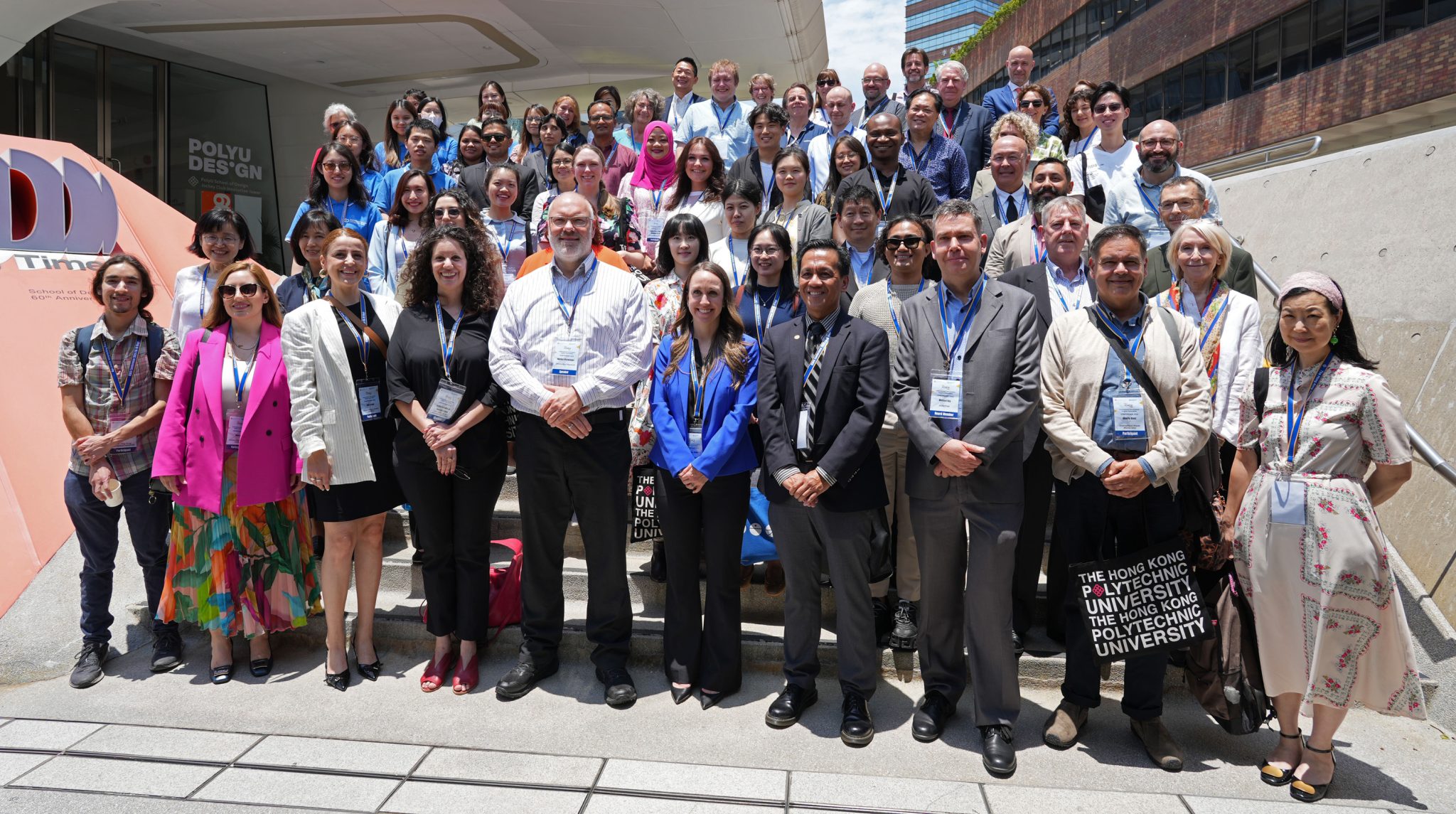
It is with great honor that we present you with the proceedings of ICAEA 2024, which took place in Hong Kong SAR, China. ICAEA 2024 was hosted by The Polytechnic University of Hong Kong, or simply PolyU, led by Professor Eric Friginal. The conference brought together academics and practitioners, all to discuss the advancements in aviation English all over the world.
The papers in this volume reflect part of the rich discussions of the conference. Themed Research and Development in Aviation Communications: Practical Applications in Training and Assessment, the conference showcased keynotes, presentations, and workshops about the evolving field of aviation language training, policy, and operational communication. As aviation continues to globalize – a fact that was clearly seen in the conference partly owing to vibrantly cosmopolitan energy of Hong Kong – the need for effective, context-sensitive language use has become more critical than ever, as this volume aims to show, not only for pilots and controllers, but across all sectors of the industry such as maintenance, cabin crew, and ground personnel.
This is also the first time that the proceedings, which are a record of our history as a community, have come under the responsibility of a Special Interest Group within ICAEA – the Research SIG. As such, the proceedings now have an Editorial Team, consisting of a Chief Editor, an Issue Editor, and an Editorial Advisory Board who are all Research SIG members, and who assisted with the peer review process.
This collection begins with three case studies that offer insights into how language influences performance and training outcomes in specific regional and institutional contexts. The first paper, by Robert Fowler, examines the cognitive impact of native language on flight training in the United States. The second paper, by Alejandro Perez and Alice Perez, reflects upon scenario-based assessments in Mexico. From America to Asia, Meng Ye and Eric Friginal explore, in the third paper, policy-driven shifts in the Greater Bay Area in Southern China. These studies demonstrate the complex interplay between language, culture, and aviation practice.
The next five full papers, which expand the initial conversation, address systemic challenges and propose pedagogical innovations. The topics range from Yadan Luo’s presentation of linguistic and sociolinguistic needs of cabin crew, to documentation errors in maintenance operations researched by Amber Wang and Eric Friginal. Malila Prado lists suggestions on the integration of pragmatic strategies in training by employing three criteria of the former Test Design Guidelines (TDGs), currently forming part of ICAO’s Doc 10197. The volume concludes with Haryani Hamzah’s broader reflections on global diversity and policy implications, and with Ramsey Ferrer’s contextual analysis of interpersonal communication training for Filipino ab initio pilots.
We hope that these contributions offer a space for reflection that bridges research and practice, advancing our understanding of aviation English and its role in safety, efficiency, and intercultural collaboration.
Scholarly Commons Citation
Prado, Malila; Roberts, Jennifer; Fowler, Robert Jr.; Perez, Capt. R. Alejandro (Alex); Perez, Alice; Ye, Meng; Friginal, Eric; Luo, Yadan; Wang, Amber Wanwen; Hamzah, Haryani; and Ferrer, Ramsey, "The Proceedings of the International Civil Aviation English Association (2024) Conference" (2026). International Civil Aviation English Association. 1.
https://commons.erau.edu/icaea-workshop/2024/proceedings/1
The Proceedings of the International Civil Aviation English Association (2024) Conference
Hong Kong SAR, China
It is with great honor that we present you with the proceedings of ICAEA 2024, which took place in Hong Kong SAR, China. ICAEA 2024 was hosted by The Polytechnic University of Hong Kong, or simply PolyU, led by Professor Eric Friginal. The conference brought together academics and practitioners, all to discuss the advancements in aviation English all over the world.
The papers in this volume reflect part of the rich discussions of the conference. Themed Research and Development in Aviation Communications: Practical Applications in Training and Assessment, the conference showcased keynotes, presentations, and workshops about the evolving field of aviation language training, policy, and operational communication. As aviation continues to globalize – a fact that was clearly seen in the conference partly owing to vibrantly cosmopolitan energy of Hong Kong – the need for effective, context-sensitive language use has become more critical than ever, as this volume aims to show, not only for pilots and controllers, but across all sectors of the industry such as maintenance, cabin crew, and ground personnel.
This is also the first time that the proceedings, which are a record of our history as a community, have come under the responsibility of a Special Interest Group within ICAEA – the Research SIG. As such, the proceedings now have an Editorial Team, consisting of a Chief Editor, an Issue Editor, and an Editorial Advisory Board who are all Research SIG members, and who assisted with the peer review process.
This collection begins with three case studies that offer insights into how language influences performance and training outcomes in specific regional and institutional contexts. The first paper, by Robert Fowler, examines the cognitive impact of native language on flight training in the United States. The second paper, by Alejandro Perez and Alice Perez, reflects upon scenario-based assessments in Mexico. From America to Asia, Meng Ye and Eric Friginal explore, in the third paper, policy-driven shifts in the Greater Bay Area in Southern China. These studies demonstrate the complex interplay between language, culture, and aviation practice.
The next five full papers, which expand the initial conversation, address systemic challenges and propose pedagogical innovations. The topics range from Yadan Luo’s presentation of linguistic and sociolinguistic needs of cabin crew, to documentation errors in maintenance operations researched by Amber Wang and Eric Friginal. Malila Prado lists suggestions on the integration of pragmatic strategies in training by employing three criteria of the former Test Design Guidelines (TDGs), currently forming part of ICAO’s Doc 10197. The volume concludes with Haryani Hamzah’s broader reflections on global diversity and policy implications, and with Ramsey Ferrer’s contextual analysis of interpersonal communication training for Filipino ab initio pilots.
We hope that these contributions offer a space for reflection that bridges research and practice, advancing our understanding of aviation English and its role in safety, efficiency, and intercultural collaboration.